When your Pedernales Electric Cooperative bill spikes every July and your patio furniture near Woodcreek starts cracking from UV damage, you’re facing the same problem as thousands of Wimberley homeowners: intense Hill Country summers make outdoor living spaces unusable for nearly five months each year.
Unlike Austin or San Antonio suburbs where shade solutions can be generic, Wimberley presents unique challenges. Your limestone-exterior ranch home probably features those beautiful large covered patios designed for Hill Country living—but the original builders couldn’t anticipate summers consistently exceeding 100°F with UV indexes hitting extreme levels. The good news? The right outdoor shades transform your patio from a heat trap into the reason you moved to the Hill Country in the first place.
Why Wimberley Patios Demand Specialized Shade Solutions
The Texas Hill Country isn’t just hot—it’s a specific kind of brutal. Wimberley sits at approximately 1,100 feet elevation, meaning you get 12% more UV radiation than coastal Texas cities (Source: National Weather Service UV Index Data, 2023). That extra exposure accelerates furniture fading, makes concrete patios too hot to walk on barefoot, and turns your outdoor kitchen into an oven by 10 AM.
The Local Climate Challenge
Between June and September, Wimberley averages 28 days above 100°F (Source: NOAA Climate Data for Hays County, 2023). Your patio absorbs that heat, radiating it back well into evening hours. Traditional umbrellas and flimsy canopies can’t handle the sustained UV assault or the sudden Hill Country wind gusts that roll through Cypress Falls and Wimberley Valley neighborhoods.
Homeowners near Jacob’s Well and Blue Hole Regional Park know the paradox: you live in one of Texas’s most beautiful outdoor destinations, yet you’re trapped inside during peak season. Quality exterior shades solve this by blocking up to 97% of UV rays while reducing patio surface temperatures by 20-25°F (Source: Professional Awning Manufacturers Association, 2022).
Architectural Considerations for Hill Country Homes
Wimberley’s distinctive architecture—limestone exteriors, cedar accents, expansive covered patios—requires shade solutions that complement rather than clash. Generic big-box store shades look out of place on your ranch home. You need products designed for:
- Mounting on limestone and stucco without damaging historic materials
- Earth-tone fabrics matching Hill Country aesthetics
- Wind resistance for the gusts that sweep across open terrain
- Large coverage areas typical of Wimberley outdoor living spaces
Comparing Outdoor Shade Types for Texas Heat
Not every shade solution performs equally under Wimberley conditions. Here’s what actually works for your climate and architectural style:
| Shade Type | UV Blocking | Wind Resistance | Hill Country Aesthetic | Best For |
|---|---|---|---|---|
| Motorized Exterior Shades | Up to 97% | Excellent (rated to 35 mph) | Excellent | Large patios, outdoor kitchens |
| Retractable Awnings | 80-95% | Good (retract in storms) | Good | Covered patio extensions |
| Solar Screens | 65-90% | Excellent | Moderate | Screened porches, windows |
| Shade Sails | 85-98% | Poor to moderate | Modern only | Contemporary homes |
| Fixed Pergola Covers | Variable | Excellent | Excellent | Permanent installations |
Motorized Exterior Shades: The Premium Choice
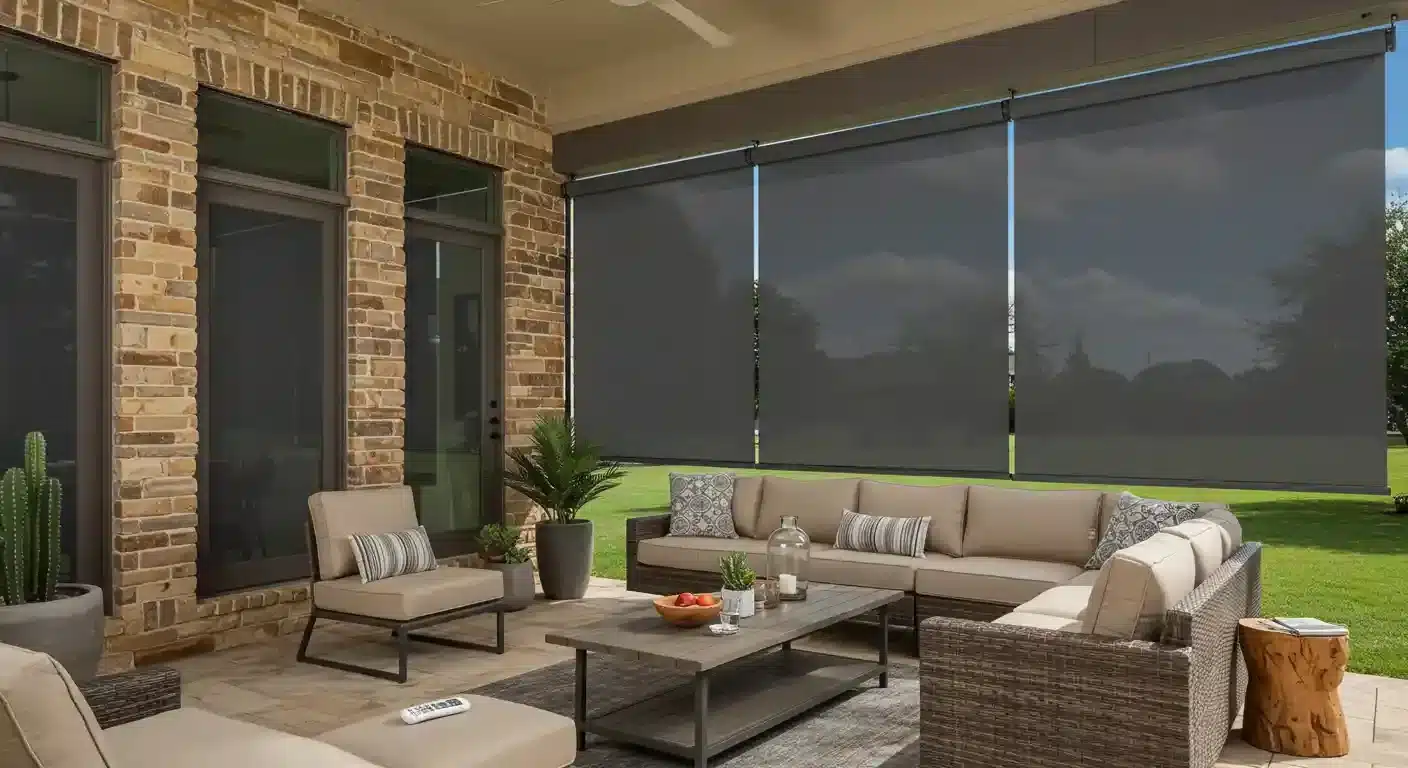
For Wimberley homeowners serious about outdoor living, motorized exterior shades offer the best combination of performance and convenience. Premium units use solution-dyed acrylic fabrics that won’t fade under Hill Country UV exposure—critical when your investment faces direct sun eight months per year.
Modern systems integrate with your home automation, allowing you to lower shades from your phone before arriving home from Wimberley Square. Wind sensors automatically retract shades during sudden storms, protecting your investment without requiring you to rush outside.
Retractable Awnings: Flexible Coverage
If your patio already has partial roof coverage—common in Woodcreek and Cypress Falls neighborhoods—retractable awnings extend your usable shade area without permanent construction. Quality awnings use powder-coated aluminum frames that resist Hill Country humidity and UV degradation.
The key specification for Wimberley installations: look for awnings rated for sustained winds of at least 25 mph. Cheaper models rated for 15 mph will fail during your first serious Hill Country wind event.
What Wimberley Homeowners Should Expect to Invest
Quality outdoor shades aren’t the cheapest home improvement, but they deliver measurable returns in comfort and energy savings. Here’s realistic pricing for Wimberley installations:
- Motorized exterior shades: $2,500-$6,000 per opening, depending on size and fabric
- Retractable awnings: $1,800-$4,500 for quality units with professional installation
- Solar screens: $8-$15 per square foot installed
- Custom shade sails: $1,500-$5,000 depending on configuration
The return? The U.S. Department of Energy reports that exterior shading can reduce cooling costs by 25-40% (Source: U.S. Department of Energy, Energy Saver Guide, 2023). For Wimberley homes with significant west-facing glass, that translates to $300-$600 annual savings on your Pedernales Electric Cooperative bills—meaning quality shades often pay for themselves within 5-8 years while immediately improving your daily comfort.
Professional Installation vs. DIY
Your Hill Country ranch home deserves proper installation. DIY shade sails and budget awnings from big-box stores frequently fail within 2-3 seasons under Wimberley conditions. Professional installers understand:
- Proper anchoring in limestone and concrete substrates
- Wind load calculations for your specific site
- Electrical requirements for motorized systems
- Warranty-preserving installation techniques
The difference between a shade that lasts three years and one that lasts fifteen often comes down to installation quality—particularly the mounting hardware and tensioning systems that resist Hill Country wind stress.
Selecting the Right Shade for Your Wimberley Property
Every Wimberley home has different requirements based on patio orientation, size, and how you use your outdoor space. Consider these factors before investing:
Sun Exposure Patterns
West-facing patios in Wimberley Valley take the worst afternoon punishment. These spaces need shades with the highest UV blocking ratings and heat-reflective fabrics in lighter colors. South-facing patios near Cypress Falls get more consistent all-day exposure, making retractable options practical since you’ll want shade earlier in the day.
Usage Goals
If you’re primarily protecting an outdoor kitchen, you need shade that won’t trap cooking heat—louvered pergola covers or exterior shades with ventilation work best. For general patio lounging, motorized shades provide the flexibility to adjust coverage as the sun moves. Dining areas benefit from retractable awnings that extend your evening entertaining season.
Aesthetic Integration
Wimberley’s distinctive Hill Country character means your shade solution should feel intentional, not aftermarket. Earth tones—terracotta, sage, sandstone, cedar—complement limestone exteriors far better than bright colors or stark white. Hardware finishes in bronze, copper, or matte black integrate with the natural palette you see throughout the area from Blue Hole Regional Park to Wimberley Square.
Ready to transform your outdoor living space? Schedule your free outdoor shade consultation in Wimberley today and get expert recommendations tailored to your specific home and lifestyle.
Making Your Patio Usable Year-Round
The right outdoor shades don’t just solve summer heat—they extend your Hill Country outdoor season from March through November. Many Wimberley homeowners report gaining 100+ additional hours of comfortable patio time annually after installing quality exterior shades.
You moved to Wimberley for the Hill Country lifestyle: stunning views, natural beauty, that sense of space you can’t find in Austin suburbs. Don’t let summer heat lock you inside. Quality outdoor shades let you enjoy your property the way you imagined when you first saw that patio overlooking the hills.
Whether you’re in Woodcreek enjoying morning coffee, hosting dinner parties in Wimberley Valley, or watching sunsets from your Cypress Falls ranch, the right shade solution makes outdoor living possible even in peak summer. Your patio is waiting—schedule your free outdoor shade consultation in Wimberley today and discover what’s possible for your home.
Frequently Asked Questions
How long do outdoor shades last in extreme Texas heat?
Premium outdoor shades using solution-dyed acrylic fabrics and powder-coated aluminum frames typically last 10-15 years under Wimberley conditions when properly installed. Budget options using printed fabrics or plastic components often fail within 3-5 years due to UV degradation and heat stress. The key longevity factors are fabric quality, hardware materials, and professional installation with proper tensioning.
Can outdoor shades be installed on limestone exteriors without damage?
Yes, experienced installers use specialized masonry anchors and mounting techniques designed for limestone and stucco common in Hill Country homes. Proper installation involves pilot drilling with masonry bits, using stainless steel expansion anchors rated for the shade’s wind load, and sealing penetrations to prevent moisture intrusion. Avoid installers unfamiliar with limestone—improper anchoring causes cracking and anchor pullout.
Do motorized outdoor shades work during power outages?
Most quality motorized shade systems include manual override options allowing operation during power outages. Premium models offer battery backup systems that provide 15-25 full cycles without grid power. Some homeowners in areas served by Pedernales Electric Cooperative add small solar panels to their shade motors for completely independent operation, particularly useful for remote Hill Country properties.
What wind rating should outdoor shades have for Hill Country conditions?
For Wimberley and surrounding Hill Country areas, outdoor shades should be rated for sustained winds of at least 25-35 mph. Motorized systems with wind sensors automatically retract when gusts exceed safe thresholds, protecting your investment during sudden storms. Fixed shade structures like pergola covers should be engineered for 60+ mph wind loads to handle severe weather events common in spring and fall.

